Saturday, July 30, 2005

What Are You Wearing?

The answer, if you're one of the subjects of this Technology Review.com article, is "a note-taking computer."

One of his most successful inventions, says Georgia Tech professor Thad Starner, is a four-inch strip of Velcro that sticks his "Twiddler" keyboard to the side of his shoulder bag. The Twiddler is a handheld chording keyboard manufactured by the Handkey corporation, and the Velcro lets Starner grab his keyboard and start typing in just two seconds flat.

Indeed, speed of access is one of the determining factors in whether a mobile information device will be used for mundane and casual tasks, according to a paper Starner recently published. Two seconds from storage to use is optimal. More than 10 seconds, the device stays unused.

One of the fundamential questions makers of PDAs and other portable devices will have to answer is "How do people make notes?" That is, how do we makes notes of things that we'll need or want to recall at a later time? The obvious answer is "grab a pen and a notepad and jot it down." For now, that's a satisfying and ultimately reliable method--or is it? Yes, I've tried using a PDA to keep track of things, but the batteries died and I lost everything, but then I've jotted down notes and phone numbers only to find them at the bottom of the washing machine a few days later. Or I've been unable to read my writing, or phone numbers have no other text associated with them so I have to call them and ask "Who are you and why do I have your number?"

But then is any device that requires typing the answer? I would say not, especially one like the Twiddler (my, that's an unfortunate name) that requires learning how to type in a way that is completely different from QWERTY, which is annoying enough. I still think voice-recognition is going to be the way to go--a reliable and accurate way to speak a note and ultimately have it convert to editable text is the Holy Grail, at least to my mind. (Yes, this exists already, and I hear it's getting better and the results tend to be less "voice wreck ignition"-like. ScanSoft's Dragon Naturally Speaking may be worth investigating...)

I suppose it's only a matter of time before compter software in general becomes voice-based, rather than typing- and/or click-based. But then having Microsoft Word react to voice commands may not be such a hot idea--given some of the things I yell at it, it may try to execute some biologically improbable functions indeed.

Masters of the Toast


News from Thorobred Toastmasters:

The Thorobred Toastmasters Club of Saratoga Springs installed new officers for 2005-2006 and honored members who earned Toastmaster International certification at a recent awards ceremony held at Café Lena on Phila Street. On June 27th Barbara Cardella, ATMS, of Greenwich took over the reigns as president from Eric Sanborn of Gansevoort. Her term as president starts July 1st, 2005 and goes through June 30th, 2006. The rest of the officers are as follows: Vice President Education, Donna Morris, ATMS of Ballston Spa; Vice President Membership, Deborah Peck-Kelleher, ATMB of Quaker Springs, Vice President Public Relations, Teresa Hunt Gifford of Schaghticoke; Secretary, Darlene Murray of Saratoga Springs; Treasurer, John E. Sheehy, CL of Whitehall; and Sergeant at Arms, Michael R. Cardella, CTM of Greenwich.

The Advanced Toastmaster Bronze award was presented to Deb Peck Kelleher. The club was awarded the Distinguished Club Award by Toastmasters International, which means the group has achieved numerous goals over the 2004-2005 club year.

The above initials refer to the levels of achievement for the officers in each of two tracks, communication and leadership. For example, CTMB is Competent Toastmaster Bronze and CTMS is Competent Toastmaster Silver. CL means Competent Leader and ATMB is Advanced Toastmaster Bronze.

Thorobred Toastmasters of Saratoga Springs is a public speaking group which meets on the second and fourth Mondays of each month at 7 P.M. at Longfellows Restaurant on 9P, Saratoga Lake. The meetings are open to anyone interested in practicing public speaking in a supportive environment. In August and December the meetings take place at the Saratoga Springs Public Library. Once a year, the club meets at Café Lena. For further information, please call 584-4129. All are welcome.


I love it when officers are "installed." It makes them sound like air conditioners.

As some of you out there may know, I joined Toastmasters in November 2001. For 2003-2004, I was president of my home club and 2004-2005 was Area Governor, overseeing six clubs in Saratoga and Washington counties. Joining Toastmasters is one of the best decisions I ever made (and there haven't been very many good ones...). If you've ever had any fear of public speaking and/or have wanted to give it a try, I heartily recommend finding a club near you. Toastmasters International has literally hundreds of clubs worldwide and their Web site makes it easy to find a club near you. It changed my life (and my career, sort of). It's also a lot of fun.

Friday, July 29, 2005

Number 10

It's all go in the Solar System this week, apparently. Astronomers have found a tenth planet, a Kuiper Belt Object larger than Pluto. Given the poetic name of 2003 UB313, it is located beyond the orbit of Pluto.

Sky and Telescope has more.

July 29, 2005 A team of astronomers using the 48-inch Samuel Oschin Telescope at Palomar Observatory and the 8-meter Gemini North telescope on Mauna Kea, Hawaii, has discovered the largest Kuiper Belt object (KBO) ever.
It is bigger than Pluto, the 9th planet.

The object, designated 2003 UB313, is currently 97 astronomical units (Earth-Sun distances) away — more than twice Pluto's average distance from the Sun. It is a scattered-disk object, meaning that at some point in its history Neptune likely flung it into its highly inclined (44°) orbit. It's currently glowing at magnitude 18.9 in the constellation Cetus.

Sirens of Titan?

The Huygens probe may have discovered life on the largest moon of Saturn. Pretty incredible if it pans out.

From the New Scientist:

IF LIFE exists on Titan, Saturn's biggest moon, we could soon know about it - as long as it's the methane-spewing variety. The chemical signature of microbial life could be hidden in readings taken by the European Space Agency's Huygens probe when it landed on Titan in January.

Titan's atmosphere is about 5 per cent methane, and Chris McKay of NASA's Ames Research Center in Moffet Field, California, thinks that some of it could be coming from methanogens, or methane-producing microbes. Now he and Heather Smith of the International Space University in Strasbourg, France, have worked out the likely diet of such organisms on Titan.

They think the microbes would breathe hydrogen rather than oxygen, and eat organic molecules drifting down from the upper atmosphere. They considered three available substances: acetylene, ethane and more complex organic gunk known as tholins. Ethane and tholins turn out to provide little more than the minimum energy requirements of methanogenic bacteria on Earth. The more tempting high-calorie option is acetylene, yielding six times as much energy per mole as either ethane or tholins.

Domo Arigato, Ms. Roboto

Better have Isaac Asimov's Three Laws of Robotics handy: a Japanese inventor has developed the first humanoid android.

Here's my question: don't we have enough real people on this planet already without having to artifically build more of them?

Are You Annoying?

Take this quiz and find out how annoying your co-workers think you are.

All of those apply to me, but since I work alone, it's not a problem.

Orgy of Integration

OK, now Motorola is just randomly combining devices. What's next--a Blackberry toaster that can embed streaming video in bread?

E-Packaging?

From Dr. Joe's blog--a story about e-paper packaging applications. Just when you thought packaging might be one application immune from the ravages of electronic media. Doh!

Hans Off

When I came across this story about Canada and Denmark fighting over a tiny Arctic island, I was reminded of what Jorge Luis Borges said about the Falklands War---"two bald men fighting over a comb." Still, I find it interesting that they took the battle to Google. Perhaps in the future all wars will be flame wars.

Canada and Denmark have taken their diplomatic tussle over a lump of Arctic rocks to the Internet with competing Google ads claiming sovereignty over Hans Island.

Some Canadians have called for a boycott of Danish pastries the way Americans disdained french fries when Paris declined to join the coalition forces in Iraq.

The diplomatic debate began Monday when Denmark said it would send a letter of protest over a visit to the 1/2-square-mile Hans Island last week by Canadian Defense Minister Bill Graham.

Graham stated Canada has always owned the uninhabited chunk of land, 680 miles south of the North Pole.

The Internet Used Book Market

It's funny--used bookstores have been around for hundreds of years but suddenly Amazon starts to deal in used books and authors and publishers freak out. What I found interesting is a study of the used book market that found that, as with cars and houses, people now take into consideration the resale value when they buy a book. Actually, people looking to sell their books are missing a good opportunity--if you donate them to a local library, often you can write off the cost of the books from your income tax as a charitable donation--potentially the full cover price but I tend to depreciate books using an unofficial formula based on condition of book, age, and whether or not I've scrawled obscenities in it (OK, I only did that once--in Bernard Goldberg's idiotic Bias).

Consider a recent paper, "Internet Exchanges for Used Books," by Anindya Ghose of New York University and Michael D. Smith and Rahul Telang of Carnegie Mellon.

The starting point for their analysis is the double-edged impact of a used book market on the market for new books. When used books are substituted for new ones, the seller faces competition from the secondhand market, reducing the price it can set for new books. But there's another effect: The presence of a market for used books makes consumers more willing to buy new books, because they can easily dispose of them later.

A car sales rep will often highlight the resale value of a new car, yet booksellers rarely mention the resale value of a new book. Nevertheless, the value can be quite significant.

This is particularly true in textbook markets, where many books cost well over $100. Judith Chevalier of the Yale School of Management and Austan Goolsbee at the Chicago Business School recently examined this market and found that college bookstores typically buy used books at 50 percent of cover price and resell them at 75 percent of cover price. Hence the price to "rent" a book for a semester is about $50 for a $100 book.

Chevalier and Goolsbee found that students were well aware of industry practices and took resale value into account when they bought books. (The study, "Are Durable Goods Consumers Forward Looking? Evidence from College Textbooks," is available at Goolsbee's Web site.)

Back to Amazon. Professors Ghose, Smith and Telang chose a random sample of books in print and studied how often used copies were available on Amazon. In their sample, they found, on average, more than 22 competitive offers to sell used books, with a striking 241 competitive offers for used best sellers. The prices of the secondhand books were substantially cheaper than the new, but of course the quality of the used books (in terms of wear and tear) varied considerably.

According to the researchers' calculations, Amazon earns, on average, $5.29 for a new book and about $2.94 on a used book. If each used sale displaced one new sale, this would be a less profitable proposition for Amazon.

But Bezos is not foolish. Used books, the economists found, are not strong substitutes for new books. An increase of 10 percent in new book prices would raise used sales by less than 1 percent. In economics jargon, the cross-price elasticity of demand is small.

One plausible explanation of this finding is that there are two distinct types of buyers: some purchase only new books, while others are quite happy to buy used books. As a result, the used market does not have a big impact in terms of lost sales in the new market.

Moreover, the presence of lower-priced books on the Amazon Web site, Bezos has noted, may lead customers to "visit our site more frequently, which in turn leads to higher sales of new books." The data appear to support Bezos on this point.

Applying the authors' estimate of the displaced sales effect to Amazon's sales, it appears that only about 16 percent of the used book sales directly cannibalized new book sales, suggesting that Amazon's used-book market added $63.2 million to its profits.

Furthermore, consumers greatly benefit from this market: the study's authors estimate that consumers gain about $67.6 million. Adding in Amazon's profits and subtracting out the $45.3 million of losses to authors and publishers leaves a net gain of $85.5 million.

IPTV

What did I tell you? The future is already upon us.

IPTV [Internet Protocol Television] is a poor label for what’s really “next-generation TV.” It’s not actually distributing TV publicly over the Internet -- that's called streaming -- but turning TV signals into Internet protocol.
Turning TV signals into Internet protocol enables two-way communication, the kind necessary for video on demand, and means programs or channels can be distributed individually over a broadband network, freeing up bandwidth. It also enables VoIP, or voice over Internet protocol, which lets cable companies offer broadband-based telephony services.

This is Broken

Came across a blog called ThisIsBroken.com, which is basically a series of (rather civilized, I should point out) rants about faulty products and services. Some of it is rather funny, along the lines of the "Goofs, Glitches, and Gotchas" page in Consumer Reports. I have to say, though, that I am actually rather happy that the Mexican Restaurant's slogan "Burritos As Big As Your Head" is an exaggeration.

Thursday, July 28, 2005

CD Review


Andrew Bird
The Mysterious Production of Eggs
Righteous Babe Records
2005
www.andrewbird.net
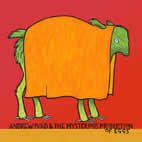
A few months ago, I read a good review of Andrew Bird’s The Mysterious Production of Eggs in Magnet magazine. Several days afterward, I’m in the local Borders, and I notice they have the album on one of those listening stations. I put on the headphones, hit the Play button, and I’m shocked. It’s really lame, boring, 80s-style arena rock. Blecch....OK, so I had hit the wrong button. Fine. But, as it turns out, the button I want to hit is broken and doesn’t work. So I go home and go to Bird’s Web site and find samples of all the songs there. (Explain to me again why there is any point in leaving the house?) I like what I hear so I log onto CD Universe and order the album. It arrives, I rip it to MP3, copy it to my iPod, and it becomes car music for a few short- and long-range errands and while it doesn’t immediately grab me, after a few cycles I begin to really get into it. Andrew Bird, by the way, is a multinstrumentalist known primarily for violin and whistling (he actually won awards for his whistling, which wasn’t something I knew you could win awards for) and was distinguished by being a member of a band called the Squirrel Nut Zippers which flirted with popularity in 1996-1997 with a track called “Hell” during that brief faux-big band revival (I have that album and they had like 500 members, so the chances are pretty good that any given musician was at one time a member of the Squirrel Nut Zippers). The Mysterious Production of Eggs is hard to describe musically; take a bunch of styles from country to folk to bluegrass to classical to rock and throw them in a blender and you’ve pretty much got the album. Still, I find most of it to be hauntingly beautiful--and the lyrics tend to be more on the surreal side and also tend to be hauntingly beautiful. “My dewy-eyed Disney bride/What has tried/Swapping your blood with formaldehyde?/Monsters?” sings Bird in “Fake Palindromes.” “Stretched out on the tarmac/Six miles south of North Platte/He can’t stand to look back/At sixteen tons of HAZMAT,” he sings in “A Nervous Tic Motion of the Head to the Left.” “Today was s’posed to be the day/Molecules decide to change their form/The laws of physics lose their sway” he sings in “Opposite Day,” just after expressing concern that he’d become a cephalopod, a reference that always scores big points with me. It’s certainly the oddest album I’ve listened to in a while, and I mean that in the nicest possible way because it’s one of the most satisfying. Oh, and once again, great CD booklet graphics. And, hey, the whistling is award-winning.

A Good Reason to Buy Inkjet Printers

I had no idea:

From PC World:
Government Uses Color Laser Printer Technology to Track Documents

Practice embeds hidden, traceable data in every page printed.

WASHINGTON--Next time you make a printout from your color laser printer, shine an LED flashlight beam on it and examine it closely with a magnifying glass. You might be able to see the small, scattered yellow dots printed there that could be used to trace the document back to you.

According to experts, several printer companies quietly encode the serial number and the manufacturing code of their color laser printers and color copiers on every document those machines produce. Governments, including the United States, already use the hidden markings to track counterfeiters.

Peter Crean, a senior research fellow at Xerox, says his company's laser printers, copiers and multifunction workstations, such as its WorkCentre Pro series, put the "serial number of each machine coded in little yellow dots" in every printout. The millimeter-sized dots appear about every inch on a page, nestled within the printed words and margins.

"It's a trail back to you, like a license plate," Crean says.

The dots' minuscule size, covering less than one-thousandth of the page, along with their color combination of yellow on white, makes them invisible to the naked eye, Crean says. One way to determine if your color laser is applying this tracking process is to shine a blue LED light--say, from a keychain laser flashlight--on your page and use a magnifier.

Urban Legends

Every so often, friends and/or associates (and occasionally blood enemies) forward along some dire warning or other--whether it be some nefarious virus making the rounds, missing children we should be on the lookout for, bills before Congress that will make it legal for ISPs to charge for each piece of e-mail sent, and so on and so forth. The latest (which I had not seen before) came to me this afternoon:
Please read and forward to anyone you know who drives.

My name is Captain Abraham Sands of the Jacksonville, Florida Police Department. I have been asked by state and local authorities to write this email in order to get the word out to car drivers of a very dangerous prank that is occurring in numerous states.

Some person or persons have been affixing hypodermic needles to the underside of gas pump handles. These needles appear to be infected with HIV positive blood. In the Jacksonville area alone there have been 17 cases of people being stuck by these needles over the past five months....

Naturally, whenever I see these my BS detector goes off and for good reason for, as it turns out, this is an urban legend, a common e-mail hoax that has been circulating for at least five years. More information can be found here.

The e-mail hoax is almost the modern equivalent of a chain letter, but even more insidiously, it works by spreading fear--and for some reason in this country we are immeasurably fearful, bizarrely eager to believe that people are preying on us every second of every day or that unspeakable dangers lurk in every food or every product. It's one thing to be common-sensibly diligent and cautious but quite another to be paranoid and terrified of everything. The news media does a good job of propagating this.

There are of course very real threats out there. How to tell the real from the false? Do what I do: whenever I get some missive like the above, I do a quick Google search on some key words (in this case, I Googled "gas pumps and hypodermic needles"). If the first 10 hits are all "urban legend" sites, chances are it's not a real threat.

Cable Talk

A write up in Ad Age of a major meeting of the cable television industry (unfortunately titled "The Thrilla in Phila"--sorry, but here in Saratoga, "Phila Street" is pronounced with a long "i" so the rhyme doesn't work, assuming it did anyway) seems to indicate that what's happening with television vis-a-vis advertising is taking a smiliar course as the magazine publishing industry. In print publishing, latent and long-festering advertiser skepticism of circulation figures has led to a surge of interest in online advertising, if for no other reason than the metrics are precise, and advertisers can see for themselves how many hits a Web page gets, how many click-throughs an ad yields, and so forth, rather than relying on a publisher's probably over-optimistic estimates of readership and pass-along copies.

Now, TV folks come right out and say it: the metrics for measuring TV ratings, frankly, suck. (I could have told them that, ever since they canceled Manimal.)

Anyway, they seem to anticipate the major changes that are ahead for the cable industry and TV in general--wait until it all becomes video on demand delivered over some cable/Internet hybrid. First VCRs and now TiVo-like objects have sown the seeds for the death of the "time slot." I fully expect in a few years TV shows won't be watched "live" or at predetermined times, but rather will be stored on a server somewhere and downloaded at the viewer's leisure. We're halfway there already: two (perhaps the only two) contemporary programs that I like (Six Feet Under and Arrested Development) I have never watched in an "original" airtime (I don't even know when they're on)--I rent the DVDs when they come out and watch them when I want. It would be enormously convenient for me to be able to just access them from a server somewhere rather than schlep up to the Drive-In Movie Store. I fully expect this will be the future. I also expect that live streaming of programs will become common, too. I seem to recall that the NCAA had several packages of Internet-based Webcasts of last March's basketball finals. Sure beats paying for cable TV. And if they could make available some kind of Dick Vitale blocking software, that would be an added bonus.

In a recent report of the future of media usage, some consultants and I referred to this whole concept as the emerging "whatever, whenever consumer experience." People will increasngly expect and demand whatever content they want to be delivered when they want it delivered. And they will seek it from whatever company can provide that experience. If it becomes cable, great for cable. But look at what's happening with satellite radio (XM is losing less money than ever!)--is "satellite TV" (not to be confused with DirectTV and that lot) far behind?

The Kids Today

You know, with their hula hoops, their rock and roll, and their fax machines. Now they've got text messaging (OK, this is not new). According to this article in USA Today, "5 billion text messages are sent a month in the USA, up from 2.8 billion a year ago, according to the wireless trade association CTIA." What is being "texted" (oy, "text" is now a verb)?

Live 8, the global series of rock concerts July 2, generated 26 million text messages worldwide in support of debt relief for African nations. At U2 concerts this summer, fans can text their names to show up on a giant screen behind the band — and register to be part of lead singer Bono's poverty-fighting ONE Campaign.

Sports teams are starting to use "texting" to bond with fans. Hair salons can use it to remind customers of appointments. You can sign up to get text updates about traffic on your commuting route and weather in your hometown. Teen People magazine will automatically text you breaking news about such weighty issues as Scarlett Johansson's love life. At SMS.ac, which wants to be the Yahoo of text messaging, guys can sign up to get a new pickup line every day.

So it appears to be a mix of the good and the horrifying.

I'm not averse to any new medium, really, but I can't get on board with this one--or at least not until they have proper keyboards attached to cellphones (which they do). My other big hangup is that I have never been able to use those cutesy IM abbreviations or smileys without feeling like a dork--and texting seems to rely on them.

But, then again, if this does continue, it will become a more expected part of life and business, as kids who grow up using this stuff bring it with them into adulthood and gradually transform everyone else's experience from the bottom up--much like technology inevitably does, be it computers, the Internet in general, and anything else you care to name. After all, it wasn't the old guys who inflicted MS Office on us all. Another reason why we should respect our elders.

Huh?

My familiarity with pop culture began to dissipate circa. 1992 and since I got rid of cable and stopped watching [current] television, perusing Entertainment News headlines is kind of like skimming the headlines of a local newspaper in a small, Icelandic village: the names are completely foreign and unfamiliar and what they're doing makes no sense to me. I readily accept this fact. But still: is there really an individual called "Bow Wow"?

Fit to be Tied

"Try on Gap jeans, get free iTunes song: Shoppers who try on Gap's new jean fits in August get a free download from Apple's iTunes stores."

I have no particular opinion about the promotion, I just shudder at the thought of there being more jeans fits coming out. As it is, I have to call over salespeople, consult charts and diagrams, and construct elaborate 3D computer models to figure out how any given pair of pants is going to fit.

"Injelitance"

C. Northcote Parkinson (whence Parkinson's Law, or "Work expands so as to fill the time available for its completion") coined another term that I just came across. "Injelitance: The rise to authority of individuals with unusually high combinations of incompetence and jealousy [toward the more competent]." Astute guy, that Parkinson.

More nuggets of Parkinsoniana here.